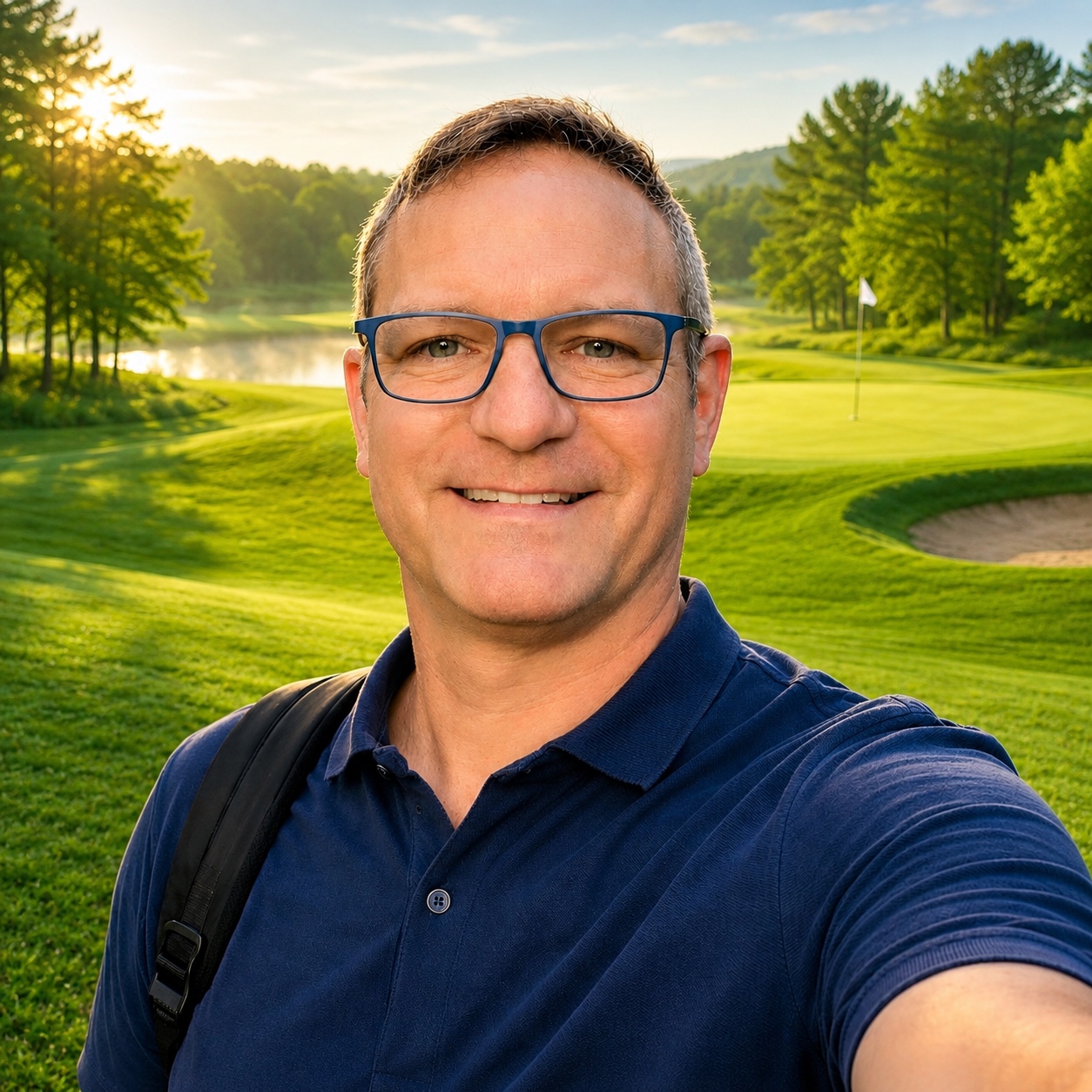
Sharing a lifetime of lessons from golf, war, loss, healing, and the journey toward wholeness.
A quieter place to write.
This blog is a simple home for my thoughts — not a business site, not a polished sales page,
and not something trying too hard. Just a place to write about golf, family, service, healing,
ceremony, and the lessons that keep showing up.
Steady Through The Storm
These reflections are moments from my journey through loss, war, golf, healing,
nature, and the pursuit of a more balanced life. They are not lessons from an
expert, but observations from someone still learning every day.
Why I'm Starting This Blog
There comes a point in life when you realize that your greatest lessons are not found in your accomplishments, but in the journey that shaped them.
For me, that journey has taken many paths.
I have been a son, a brother, a husband, a father, a soldier, a PGA Golf Professional, a veteran, a mentor, and a man searching for healing and wholeness.
Along the way, I have experienced both great joy and profound loss. I have known success and failure, confidence and doubt, purpose and uncertainty. Every chapter has left its mark on me.
For more than fifty years, golf has been one of my greatest teachers.
It taught me discipline, patience, humility, resilience, and the importance of showing up, even on the days when nothing seemed to be working. But golf was never the only teacher.
Military service taught me responsibility.
Loss taught me gratitude.
Nature taught me stillness.
Relationships taught me humility.
And life itself continues to teach me that becoming whole is a lifelong journey.
This blog is not about having all the answers.
It is simply a place where I can share the lessons I have gathered along the way.
Some reflections will be about golf.
Some will be about serving in the military and life after service.
Some will explore grief, healing, relationships, the Four Shields, and the quiet wisdom that can only be gained through experience.
Most of all, this is a place to slow down and reflect.
If something I write encourages another person to keep going, to see life from a different perspective, or to find hope in the middle of their own storm, then these words have served their purpose.
Thank you for walking this journey with me.
We're all finding our way, one step at a time.
Learning to Slow Down
For most of my life, slowing down felt uncomfortable.
I grew up believing that hard work was the answer to almost everything. If something wasn’t working, you worked harder. If you were tired, you pushed through. If there was a challenge ahead, you met it with effort, determination, and discipline.
That mindset served me well for many years.
It helped me become a competitive golfer. It helped me through military service. It helped me build a career as a golf professional. It helped me provide for my family and accomplish goals that mattered to me.
But eventually, I discovered something I never expected.
The same qualities that helped me succeed could also wear me down.
For years, I lived at a pace that felt normal because it was all I knew.
I wasn’t necessarily unhappy. I was simply always moving.
Looking back now, I realize that I spent much of my life preparing for the next moment instead of fully living the one I was in.
Then life began forcing me to slow down.
My body began asking for more recovery. Stress became harder to ignore. Sleep became more important.
At first, I resisted. Slowing down felt like weakness. It felt unproductive. It felt as though I was somehow falling behind.
But behind whom?
That was the question I eventually had to ask myself.
You cannot rush healing. You cannot rush trust. You cannot rush wisdom. You cannot rush a marriage. You cannot rush a sunrise. You cannot rush the process of becoming who you are meant to be.
Today, some of my favorite moments are the ones I barely noticed years ago.
Sitting quietly on the porch with a cup of coffee. Walking through the woods with my dogs. Listening to birds in the morning. Watching deer emerge from the forest. Playing golf without feeling the need to prove anything. Talking with my wife at the end of the day.
These moments would have seemed ordinary to my younger self. Now they feel extraordinary.
Slowing down has not made me less ambitious. It has made me more intentional.
I still care about growth. I still care about learning. I still care about contributing. But I no longer feel the same need to constantly chase.
Instead, I am learning to appreciate. To notice. To breathe. To be present.
Peace is not found at the end of the journey. Peace is found in the way we walk the journey itself.
I spent many years trying to get somewhere. Now I am learning how to be where I am.
And that may be one of the most important lessons life has ever taught me.
The Cost of Always Being Strong
For most of my life, being strong was not a choice.
It was simply what I knew.
As a young boy, I learned to keep moving forward. Later, golf taught me discipline and perseverance.
The military taught me responsibility and resilience. Life taught me how to endure loss,
disappointment, pressure, and uncertainty.
Strength became part of my identity.
When things got difficult, I pushed through.
When I was hurting, I kept going.
When others needed me, I showed up.
Those qualities helped me survive many challenges throughout my life. They helped me build a career,
support my family, serve my country, and navigate some very difficult seasons.
But there is another side to strength that people rarely talk about.
The cost.
For years, I thought strength meant carrying everything myself.
I believed that asking for help was weakness.
I believed that showing emotion was something to be controlled.
I believed that if I worked hard enough, stayed disciplined enough, and remained tough enough,
I could handle whatever life placed in front of me.
Sometimes that worked.
Sometimes it didn't.
What I eventually learned is that carrying everything alone comes with a price.
Unspoken grief has a price.
Unprocessed trauma has a price.
Constant responsibility has a price.
Always being the strong one has a price.
The problem is that the bill often arrives years later.
It may appear as exhaustion.
It may appear as anxiety.
It may appear as anger.
It may appear as depression.
It may appear as distance in relationships.
Or it may simply appear as a quiet sense that something inside has become disconnected.
For many years, I did not fully understand this.
I thought the answer was to become stronger.
What I have learned instead is that sometimes the answer is becoming more honest.
Honest about fear.
Honest about grief.
Honest about limitations.
Honest about needing support.
Honest about the fact that no one is meant to carry life entirely alone.
That realization was not easy for me.
Like many veterans, athletes, and high-achievers, I was accustomed to solving problems through effort.
If something felt difficult, my instinct was to work harder.
But some challenges cannot be conquered through force.
Some wounds heal through understanding.
Some burdens lighten when they are shared.
Some lessons arrive only when we stop fighting them.
Today, I still value strength.
I still believe in discipline, responsibility, and perseverance.
But my definition of strength has changed.
Strength is not pretending everything is fine when it isn't.
Strength is not carrying every burden alone.
Strength is not hiding every emotion behind a mask of toughness.
Real strength is having the courage to face the truth.
Real strength is allowing yourself to be seen.
Real strength is remaining open-hearted after life has given you reasons to close down.
The older I get, the more I realize that strength and vulnerability are not opposites.
They are partners.
One without the other eventually becomes incomplete.
For much of my life, I focused on becoming stronger.
Now I am learning something different.
I am learning how to become whole.
And that may be the most courageous journey of all.
What I Learned From My Brother's Death
There are moments in life that divide everything into
before
and
after
.
For me, one of those moments came in May of 1983.
My older brother, Kyle, drowned in a boating accident. He was just eighteen years old.
I was thirteen.
At that age, I didn't fully understand death. I only knew that someone who had always been part of my life was suddenly gone. One day we were brothers who played golf together, argued, laughed, and dreamed about the future. The next day, there was an empty space that could never truly be filled.
Losing a sibling changes a family forever.
Everyone grieves differently.
Some people cry.
Some become angry.
Some become quiet.
Some throw themselves into work or responsibility.
As a young boy, I didn't know how to process grief. I did what many children do. I kept moving forward.
Outwardly, life continued.
School continued.
Golf continued.
The world continued.
But something inside me had changed.
For many years, I carried something I couldn't even put into words.
Part of it was sadness.
Part of it was confusion.
And part of it was guilt.
Somewhere deep inside, I carried the irrational belief that I should have somehow prevented what happened. I knew logically that a thirteen-year-old boy could not have stopped a tragic accident, but grief doesn't always follow logic.
Sometimes it creates stories that stay with us for decades.
It wasn't until much later in life that I finally began facing those stories.
Through counseling.
Through conversations.
Through time in nature.
Through my Vision Quest.
Through men's work.
Little by little, I began understanding that healing isn't about forgetting someone you love.
It is about learning to carry their memory differently.
Today, I no longer think about Kyle only through the lens of his death.
I remember his laughter.
His competitiveness.
The hours we spent on the golf course.
The way brothers challenge each other without ever imagining there might come a day when those moments simply stop.
His life shaped mine in ways I didn't recognize until many years later.
His death also taught me something about time.
None of us knows how much of it we have.
We make plans for next year.
For retirement.
For "someday."
But life doesn't always follow our schedule.
That realization has made me value ordinary moments much more than I once did.
A conversation with my wife.
A walk with my dogs.
A round of golf with a friend.
Watching deer emerge from the woods.
Calling family back in Texas.
These moments may seem small.
But they are life.
Losing Kyle also taught me that grief doesn't have an expiration date.
Even after forty years, there are moments when a memory catches me by surprise.
A song.
A photograph.
A familiar place.
A thought that appears out of nowhere.
The sadness may soften over time, but love remains.
If anything, I have learned that grief is simply love that no longer has a physical place to go.
One of the greatest gifts I have received in recent years has been letting go of the guilt I carried for so long.
I finally realized that I was never meant to carry the weight of my brother's death.
I was only meant to carry the love of having been his brother.
That has changed everything.
Kyle's life did not end the day he died.
His influence continues through the people he touched.
Through the lessons he unknowingly taught me.
Through every moment I choose to appreciate this life a little more deeply because I know how quickly it can change.
I still miss my brother.
I probably always will.
But today, when I think of him, I try not to ask why his life was so short.
Instead, I find myself grateful that, for eighteen years, I had the privilege of calling him my brother.
Why I Spend More Time in Nature Now
If you had told me twenty years ago that one of my favorite places would be a quiet forest with no destination, I probably wouldn’t have believed you.
Back then, life was about staying busy.
There was always another lesson to teach, another tournament to prepare for, another responsibility waiting for my attention. Productivity felt like purpose. If I wasn’t accomplishing something, I often felt like I was falling behind.
Today, I see life differently.
Now, one of the first places I go when life feels overwhelming is the woods.
Not because nature solves my problems.
But because it reminds me what truly matters.
There is something about walking beneath tall trees that quiets the constant conversation inside my mind.
The forest never asks me to prove anything.
It doesn’t care about titles, accomplishments, or failures.
It doesn’t judge my past.
It doesn’t worry about tomorrow.
It simply exists.
And somehow, that becomes an invitation to do the same.
Over the past few years, I have spent countless hours walking with my dogs through the forests near our home.
Those walks have become far more than exercise.
They have become part of my healing.
Some mornings I leave the house carrying stress.
Other mornings I carry questions.
Sometimes I carry grief.
Sometimes frustration.
Sometimes nothing at all.
Yet almost every time I return home, I feel lighter than when I left.
Not because I found answers.
But because I remembered that not every question needs an immediate solution.
Nature has become one of my greatest teachers.
The changing seasons remind me that every stage of life has its purpose.
Old trees remind me that strength grows slowly.
A flowing creek reminds me that life keeps moving, even after storms.
Watching deer emerge quietly from the forest reminds me that some of life’s greatest gifts appear only when we become still enough to notice them.
Even the silence teaches.
In today’s world, silence has become rare.
We fill our days with news, social media, notifications, podcasts, and endless information.
We are constantly consuming.
Nature asks us to do something different.
It asks us to pay attention.
To listen.
To breathe.
To observe without needing to control.
Some of my most meaningful moments have happened while standing alone among the trees.
Not because something dramatic occurred.
But because nothing did.
There was only the sound of birds.
The wind moving through the leaves.
The rhythm of my own breathing.
Those moments have taught me that peace is often much quieter than I imagined.
I also think nature has helped me become more grateful.
It reminds me that life is made up of ordinary moments that are easy to overlook.
A sunrise.
A rainy morning.
A fox crossing the trail.
An owl calling before dawn.
Two dogs happily exploring a creek.
A conversation with my wife after a walk.
These are not interruptions to life.
They are life.
As I grow older, I find myself spending less time searching for extraordinary experiences and more time appreciating ordinary ones.
That may be one of the greatest gifts nature has given me.
It has taught me that healing does not always happen in dramatic breakthroughs.
Sometimes it happens one quiet walk at a time.
One deep breath at a time.
One sunrise at a time.
And if you keep showing up, the forest has a remarkable way of reminding you that, just like nature itself, you are always growing - even when you cannot yet see it.
The Four Shields
The Four Shields give me a practical way to look at life. They are not about becoming perfect.
They are about noticing where I am strong, where I am stuck, and where I need to return.
East
Vision, direction, beginning.
South
Body, emotion, connection.
West
Truth, shadow, letting go.
North
Responsibility, structure, discipline.
Center is not a destination. Center is the practice of coming back to what is real.
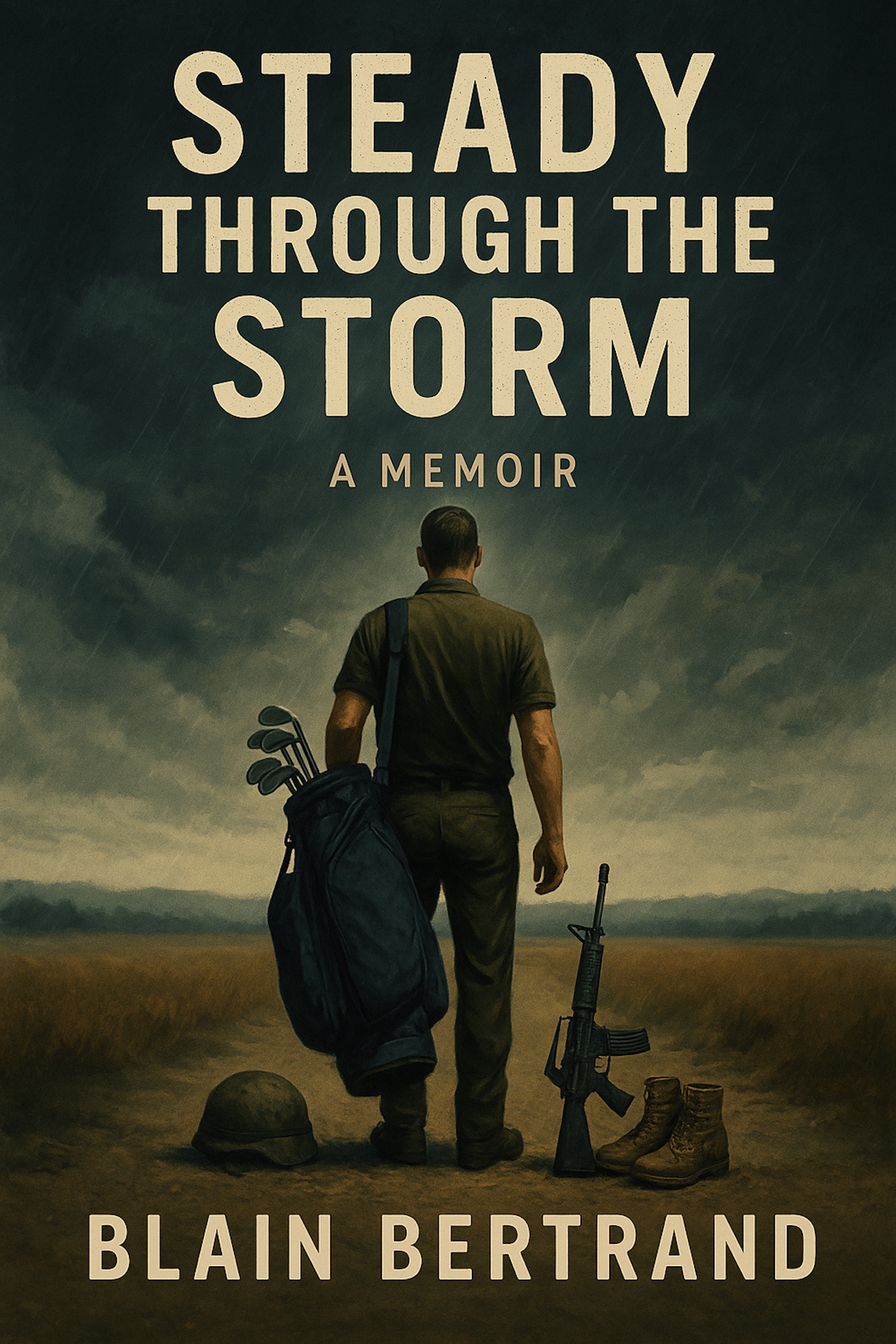
Featured Book
Steady Through The Storm
A Journey Through Loss, War, Healing, and Wholeness
What does it take to rebuild a life after loss, war,
heartbreak, and trauma?
In
Steady Through The Storm
, I share my personal journey from
growing up in Texas, serving as a Combat Engineer during Desert Storm,
building a career as a PGA Golf Professional in Germany, and eventually
facing PTSD, loss, and the search for healing.
Through nature, golf, brotherhood, and the Four Shields, I discovered
that healing is not about becoming someone new—it is about becoming
whole.